Originally published to 8 News Now on December 17, 2024.
2019’s live-action that’s not actually a live-action version of The Lion King grossed a staggering $1.6 billion worldwide. With such success, it was inevitable that Disney would revisit the franchise. Thus, Mufasa: The Lion King was born.
A hybrid of prequel and sequel, the film explores the origin story of Mufasa, Simba’s father, and how he rose to become king of Pride Rock. By extension, it also delves into Scar’s backstory, shedding light on how he became a bitter recluse determined to reclaim the throne he believes is rightfully his.
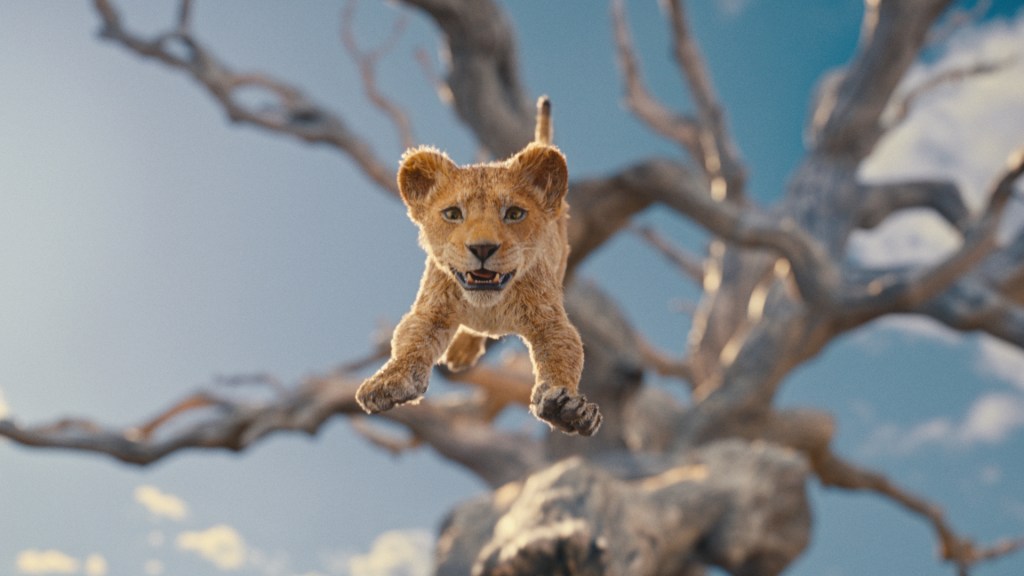
Visually, Mufasa makes some improvements over its predecessor. The 2019 remake’s commitment to photo-realism often limited the characters’ emotional expressiveness, as real animals can’t emote like humans. Here, the animators strike a better balance, loosening the constraints of realism to give characters more range. The result dips slightly into the uncanny valley at times but ultimately allows for more engaging performances.
Not everything visual is a treat in Mufasa, however. Director Barry Jenkins took liberties with camera movement in the film, creating shots that would not be remotely feasible in reality, and it feels like nearly every moment is accompanied by a sweeping, epic motion. With those efforts, the filmmakers likely intended to prompt feelings of awe. However, for me, it often prompted feelings of nausea, at times taking away from the emotional beats of the film.

Many of those emotional moments that work in the film are tethered to the original. The stakes that are introduced in Mufasa don’t have the same weight as the ones that existed in the 1994 classic. It leans hard on the viewer’s ties to either the original animated version, or its late 2010s remake.
The pacing of the film is a bit all over the place. The first third feels like a cinematic speedrun, with much of the dialogue coming in hot and heavy without natural pauses. In the second act, things slow down to a crawl before hurtling into the finale at breakneck speed. The result is an uneven experience.
And before you say, “It’s a Disney movie about lions, it doesn’t have to be Shakespeare,” the 1994 original was literally Shakespeare, famously following the general outline of Hamlet. Those great expectations, perhaps, set the stage for disappointment when the conflict and resolution in Mufasa is nowhere near the quality of its predecessor, which was based on some of the most timeless literature available.
Lin-Manuel Miranda, the composer/lyricist behind Mufasa, has delivered iconic songs in other films like Moana and Encanto. Here, however, his contributions feel underwhelming. Following in the footsteps of Elton John’s Oscar-winning music from the original Lion King was always going to be a daunting task, but Mufasa’s soundtrack fails to leave a lasting impression. The songs are serviceable but lack the memorable hooks or emotional depth that made the original’s music unforgettable.
In the end, Mufasa: The Lion King is visually appealing, family-friendly, and sure to capture the attention of younger audiences. However, those looking for emotional depth, or music that rises above the surface may find themselves unsatisfied, and simply craving the master class in animated storytelling that was the 1994 Disney classic.

 Justin Walker
Leave a comment