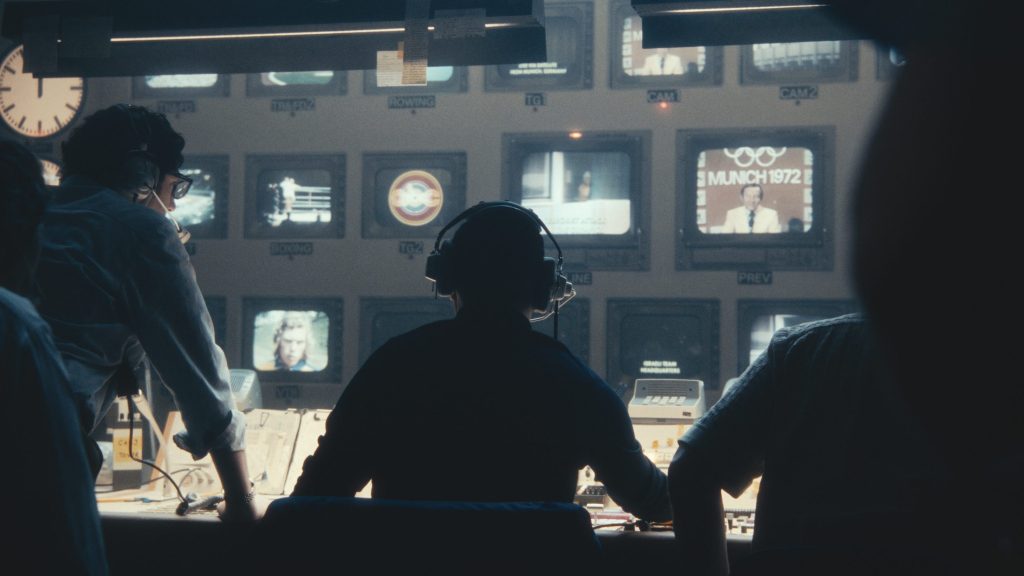
The 1972 Munich Olympics have long been a wellspring for media portrayals, from gripping documentaries to TV dramas and even Steven Spielberg’s Academy Award-nominated Munich. September 5 offers a fresh perspective on this oft-revisited tragedy by focusing on the ABC sports team unexpectedly thrust into the maelstrom of global politics and terrorism.
The filmmakers’ meticulous attention to detail, from the grainy cinematography to the confined, cluttered sets of a 1970s television control room—immerses viewers in the era. While the film’s visual scope may be more claustrophobic than James Mangold’s A Complete Unknown, it fits the storytelling.
September 5 centers on the journalists and producers navigating the chaos of live reporting rather than a granular recounting of the events that claimed 12 lives. The film succeeds in portraying the ethical and logistical dilemmas the ABC Sports team faced. One scene shows them deciding whether to broadcast breaking news without confirmation from two independent sources. The moment vividly captures the ethical tightrope of journalism: balancing accuracy against the relentless demand to be first.

While lacking marquee names, the ensemble cast delivers authentic and grounded performances. Peter Sarsgaard anchors the film with quiet authority. At the same time, John Magaro is particularly compelling as Geoffrey Mason, the head producer, grappling with the weight of responsibility in the Munich control room. Leonie Benesch’s portrayal of a translator caught in the crisis adds a poignant layer of human vulnerability. The subdued performances fit with the film’s overall tone.
While not groundbreaking, the film’s strength lies in the sum of its well-crafted parts. It weaves a taut, claustrophobic narrative that will resonate with viewers drawn to high-stakes historical events and the intricacies of journalism. By focusing on the unsung heroes behind the scenes, September 5 offers a compelling look at the pressures and perils of live reporting.


 Justin Walker
Leave a comment